NHS Shetland: Improving the Stroke Pathway through Multidisciplinary Team Learning
At NHS Shetland, in-situ simulation has evolved beyond traditional education and skills training to become a powerful tool for quality improvement and system redesign. Building on our established multidisciplinary simulation programme, which brings together ambulance crews, nurses, doctors and allied health professionals in their own clinical environment, we have increasingly adopted a translational simulation approach—using simulation to identify patient safety issues, test processes and strengthen patient pathways.
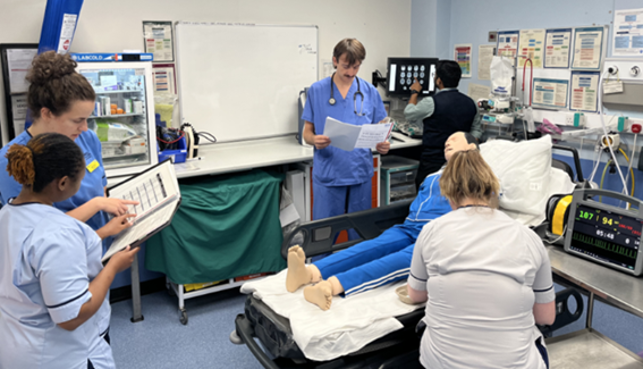
One recent focus has been the acute stroke pathway. Although thrombolysis is an infrequent event in a remote island setting, it is a time-critical intervention where effective coordination across multiple services is essential. Using in-situ simulation, we brought together staff from the Scottish Ambulance Service, Radiology, the Emergency Department, Medical teams and supporting services to rehearse the complete patient journey from pre-hospital assessment through to imaging, decision-making and administration of thrombolysis.The simulations allowed teams to walk through the entire pathway in real time, testing communication processes, role clarity, equipment availability and the interface between departments. As with all translational simulation, the emphasis was not simply on individual performance but on understanding how the wider system functioned under pressure. The exercises highlighted opportunities to streamline patient flow, clarify escalation processes and improve coordination between the ambulance service and hospital teams. A similar exercise subsequently delivered in Primary Care facilitated similar conversations among the team, identifying opportunities to strengthen processes and generated further opportunities for improvement within the wider stroke pathway.
A particular strength of the programme has been the ability to gather staff from different disciplines around a shared goal and create a safe environment in which operational challenges can be explored and addressed. This aligns with the overarching aims of our simulation programme: improving communication, strengthening team working, integrating new protocols, optimising resource utilisation and enhancing patient safety.
The learning generated through these simulations has informed ongoing refinements to the stroke pathway and increased confidence among staff involved in the care of patients presenting with acute stroke. Importantly, the work has reinforced the value of simulation as a quality improvement methodology, enabling NHS Shetland to identify system issues before they affect real patients and ensuring that even low-frequency, high-risk presentations can be managed safely and effectively.
For remote and rural services, where specialist presentations may be uncommon but carry significant consequences, translational simulation provides a practical and impactful approach to improving both systems of care and patient outcomes. NHS Shetland continues to expand this work as part of its wider commitment to multidisciplinary learning, patient safety and high-quality rural healthcare.