
Dear Network Members,
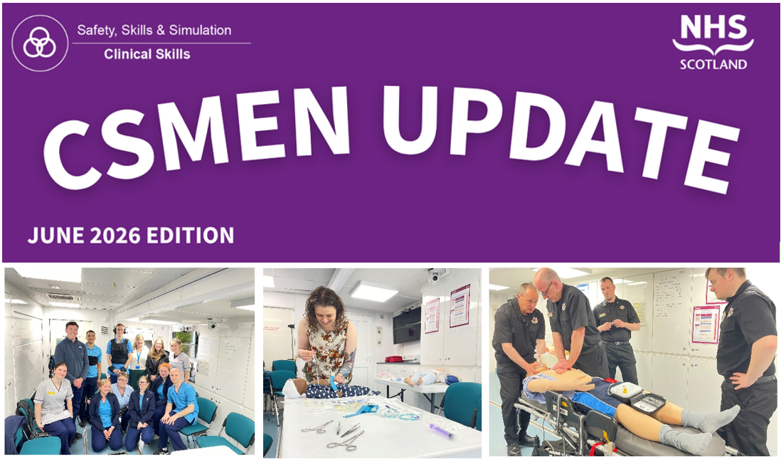
Across the simulation and clinical skills community, the landscape continues to evolve at pace, with innovation opening up exciting new possibilities for training, learning and the scope with which it is delivered. As we enter the second half of the year, we are looking forward to what lies ahead as the applications of simulation and its impact continue to expand across disciplines and are also looking back at what has been achieved this year thus far.
In this edition, we are delighted to share a snapshot of what that evolution looks like in practice with a feature piece on the growing role of advanced simulation and virtual reality in optometry training as well as an update on the local and national work of SCSCHf.
Additionally, the Mobile Skills Unit has enjoyed a moment in the spotlight recently, with features in both the press and on the radio! This coverage accompanies a new perspective on hosting the MSU, a recap of the MSU’s year to date and newly released dates for the MSU Faculty Development Course.
A busy edition, and a great overview of the progress across the network, its partners and Scottish simulation so far this year.
Scaling Optometry Education Through Simulation and Digital Innovation
Erica Campbell-Walker
PSD Scotland has entered a new era in which it delivers clinical placements within the fifth year of undergraduate optometry programmes in Scotland, incorporating an independent prescribing qualification for the first time.
The change
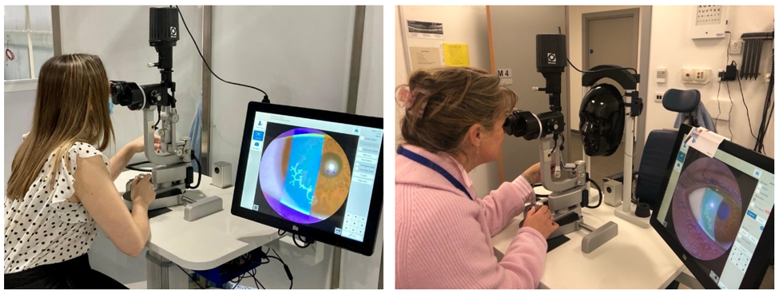
With this change, and as demand for postgraduate optometry training grows, traditional models of clinical education are increasingly coming under strain. For Independent Prescribing (IP) pathways in particular, reliance on clinical placements presents significant challenges, not only in terms of capacity but also in ensuring equitable access and consistent learning experiences across Scotland. In response, PSD Scotland Optometry education, training and workforce development team, led by Kathy Morrison and Lesley Rousselet, has been innovating further in simulation and digital technology, transforming the way education is delivered and supporting workforce development.
The challenge
Central to this transformation is a clearly defined challenge: the requirement for supervised clinical placement hours creates a bottleneck, limiting progression for many practitioners. At the same time, access to placements is not evenly distributed, with those in rural and island areas often facing greater barriers. This results in variability in both opportunity and experience, highlighting the limitations of a system that is increasingly difficult to scale.
To address these challenges, a new model for postgraduate IP optometry education has been developed, one that moves away from opportunistic exposure towards a structured, learner-centred approach.
The focus is on accessibility and standardisation, ensuring that all learners receive consistently high-quality educational experiences regardless of geography. Importantly, the model also supports progressive development through structured feedback, enabling continuous improvement in both clinical and non-technical skills.
Simulation as a solution
This vision is realised through a national simulation model that combines physical infrastructure with advanced digital technologies. Simulation centres are complemented by mobile and remote delivery solutions, enabling flexible access to training across Scotland. Technologies such as virtual reality slit lamps (EyeSi) and three-dimensional imaging enhance realism, while 3D capture and playback allow learners to revisit and review clinical cases in detail, supporting reflection on their management and clinical decision-making. This approach creates an immersive and repeatable learning environment, bridging the gap between theory and real-world clinical practice.
Alongside the delivery model, a robust evaluation framework has been implemented to ensure quality and continuous improvement. The SIMQUAL tool also provides deeper insight into the quality of simulation across key dimensions, supporting ongoing refinement of the programme. Early findings indicate that simulation is already having a positive impact, particularly in improving learner confidence and clinical reasoning, while also identifying areas for further development.
Simulation updates and opportunities
Looking ahead, the next phase of development focuses on further integration of virtual reality and artificial intelligence. Emerging technologies such as VR-enabled remote simulation and AI-driven simulated patients have the potential to expand access even further while maintaining consistency and quality. These innovations will support more immersive, interactive learning experiences and represent a significant step towards a fully scalable digital education solution.
PSD Scotland optometry continues to expand its simulation offering, with ongoing development of IP-focused simulation sessions, 3D case discussions, and enhanced digital learning capabilities, including AI avatars and VR headsets. These initiatives aim to support learners across all regions and provide flexible opportunities to engage with high-quality clinical skills training.
For further information please reach out to nes.optometrysimulation@nhs.scot
MSU Update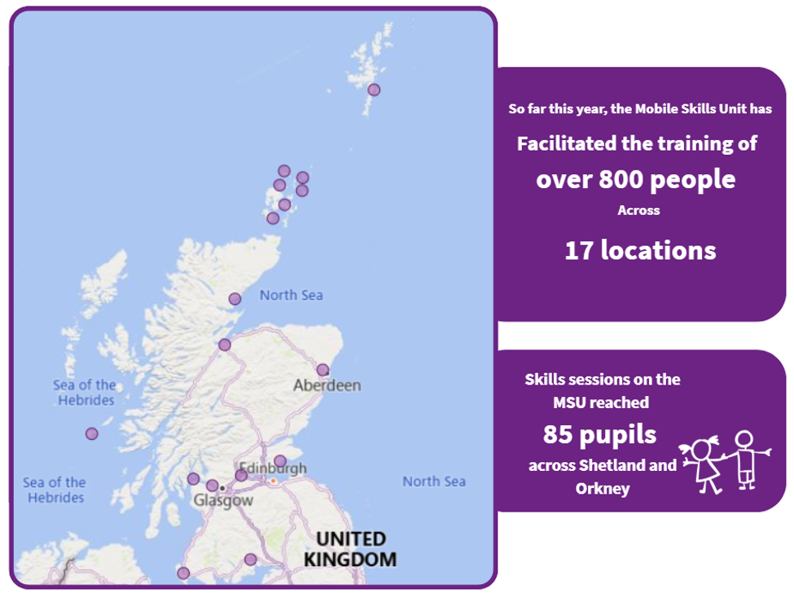
Spotlight on the Mobile Skills Unit in Shetland through the eyes of an MSU Host
Tracy Lavelle, Resus/Practice Education Officer and MSU Host
Each year the MSU visits Shetland, the local community are provided with opportunities for learning and development in an environment equipped with state of the art manikins and facilities. The MSU visit is my greatest work highlight, I enjoy this opportunity to meet and train with folks I would otherwise not normally meet. It is always a learning event for me, where I gain better understanding of how other teams and services operate.
We provided training for > 100 people, which included emergency services, First Responders, HMCG, Fire crews, dental teams, midwives, community nursing teams, O.T’s, physiotherapists, care home health care support workers, student nurses, and the general public who requested baby and child first aid, plus school children who performed very well in an NHS escape room.
Despite working with the NHS for 25 years, I learned so much from my colleagues. I was impressed at how much they have achieved for their patients and society. What was also very apparent with the staff sharing careers is how much life experience they have alongside the NHS experience they offer colleagues and patients, what an amazing group of staff I work with and without inviting them on to the MSU much would have remained unknown. I am delighted they made time to pop onto the MSU and show case what they offer their teams and services provided to folks on Shetland.
We were fortunate to highlight the positives of the MSU for Shetland in the Shetland Times both online and in paper and the Radio BBC Shetland.
Find Tracy’s full reflection on hosting on the CSMEN Website.
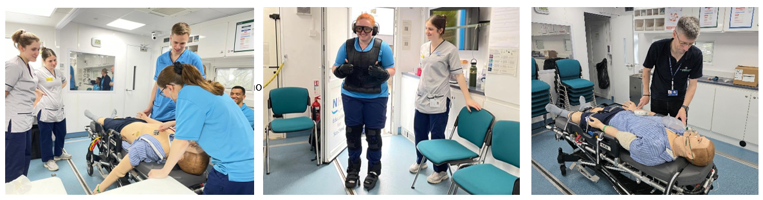
“The MSU provides a fantastic learning environment. It increases the confidence of individuals by ensuring a variety of scenarios and situations are discussed, worked through and reflected on. The quality of resources we can use in the unit are brilliant, and it has certainly meant that some of the families undertaking BLS training for the first time have received a very positive experience.” – Andrew Best Training Advisor for NHS Shetland
MSU reaches the Orkney Outer Isles
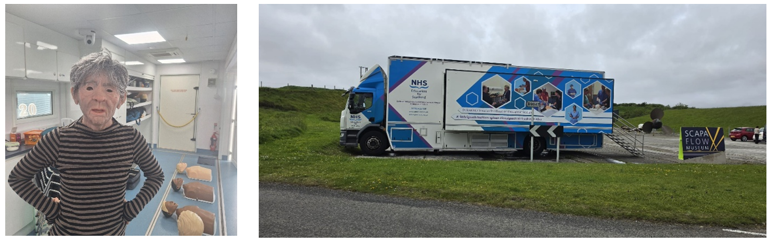
In June, the Mobile Skills Unit (MSU) undertook another ambitious and rewarding island tour, delivering training across the Orkney Outer Isles.
Visits took place in Stronsay, Sanday, Westray and Hoy. Although the MSU was unfortunately unable to reach Rousay due to ferry access issues, training still went ahead—demonstrating the flexibility and commitment of the local faculty to ensure no opportunity was missed.
Over an intensive two-week programme, the Orkney clinical skills team delivered a wide range of training to GPs, nurses, and SAS personnel across the islands, including:
· Pre-hospital emergencies
· Paediatric BLS and airway management
· IV cannulation and IO access
· Community-based emergency scenarios
· Obstetrics and gynaecology
· Deteriorating child training
The team also extended their reach into the community, visiting local schools to deliver basic life support (BLS) and choking training to over 60 pupils. Additional community BLS sessions were delivered, further strengthening local resilience and lifesaving skills.
Feedback from across the islands has been overwhelmingly positive, with participants highlighting both the value of the training and the importance of accessible, high-quality education in remote and rural settings.
MSU Faculty Development Course – New Dates
We are delighted to announce new MSU Faculty Development Course dates for 2027/28:
· Thursday 8 & Friday 9 April 2027
· Thursday 29 & Friday 30 July 2027
· Thursday 4 & Friday 5 November 2027
· Thursday 3 & Friday 4 February 2028
Interested in hosting the MSU or delivering training on the MSU? This is the course to take! Further information on the course can be found here and to sign up, fill in the registration form.
Scottish Centre for Simulation and Clinical Human Factors Update
The months are speeding by, and there are lots of pieces of working happening in the Scottish Centre for Simulation & Clinical Human Factors (SCSCHF).
National work:
Mid may saw the final register ready course for 25/26 delivered, with excellent feedback from trainees. All faculty got together to have a review day of all the courses, ready for 26/27 cohorts. Anaesthetic, Trauma & Ortho study days have also run in the centre, with large numbers of residents from across Scotland attending. Great positive vibes in the centre when all these national events run.
Local Forth Valley work:
Delivery of scenarios in conjunction with the Operating Department team in FV to consider leadership/ professional behaviours for managers across all specialities. The session enables managers attending to develop skills in managing difficult conversations and situations. The session follows 3 scenarios of interactions between 2 members of staff, the staff members and their line manager and support from their staff side representative. The take forward / home messages at the end of the scenarios enable managers to facilitate difficult situations.
Other local work includes development of the Transformative simulation team- supporting various projects and supporting undergraduate medical student sim sessions. Ongoing support for IMG residents continues, often with bespoke 1:1 scenarios and discussions.
Sim safety club:
Sim safety club remains popular, with attendance from staff across FV and NHS boards across Scotland. Recent topics have included civility and its impact for all staff and patients. Scenarios have been clinically based and opened discussions with participants on the effect of incivility.
Finally, the SCSCHF admin & sim tech teams have been kept busy, ensuring every course runs smoothly, big thanks to Catriona, Jamie, Sam & Sarah ❤️
Please refer to the SCSCHF website for all course dates.
Upcoming Conferences
Scottish Simulation SIMposium
Only 50 days remain until the 2026 Scottish Simulation SIMposium! The much anticipated event will take place on the 20th of August 2026 at the University of the West of Scotland, with the theme of “Sustainability in Simulation” and features Dr Victoria Brazil as the keynote speaker.
Tickets can be purchased on Eventbrite and any further queries can be directed to LAN.SIMPosium2026@lanarkshire.scot.nhs.uk
Further conference details relevant to clinical skills and simulation are available on the CSMEN website.
BASICS Scotland Update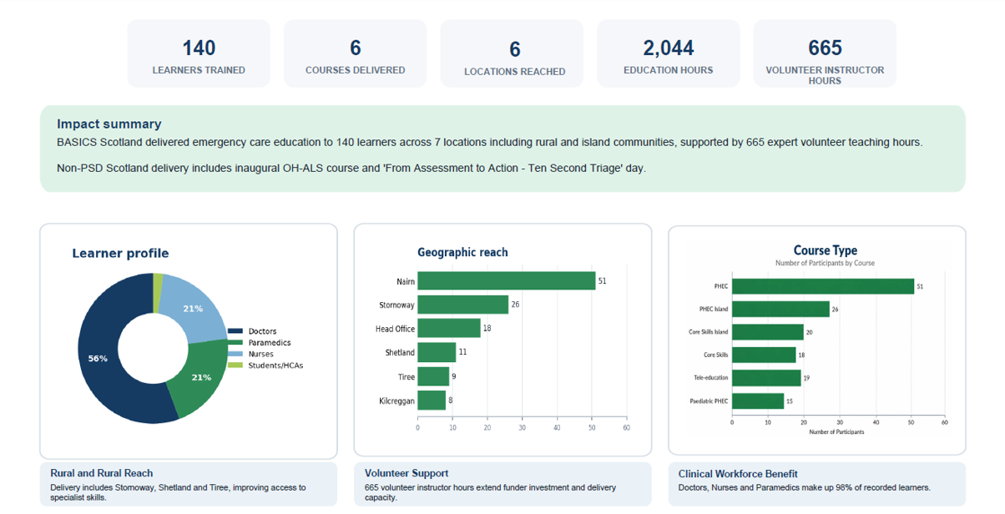
The next quarter promises to be particularly busy, with a comprehensive programme of educational activity planned across Scotland. Scheduled delivery includes Core Skills courses in Gairloch, Dunoon and Skye, Pre-Hospital Emergency Care (PHEC) courses in Stirling and Nairn, an Out-of-Hospital Advanced Life Support (OH-ALS) couse and our annual Faculty Development Day.